Wood or composite decking around the pool: what to know
A deck makes the area around the pool warm to look at and pleasant underfoot. Natural wood needs regular care and composite less, but both last for years only if they sit on a proper, ventilated substructure.

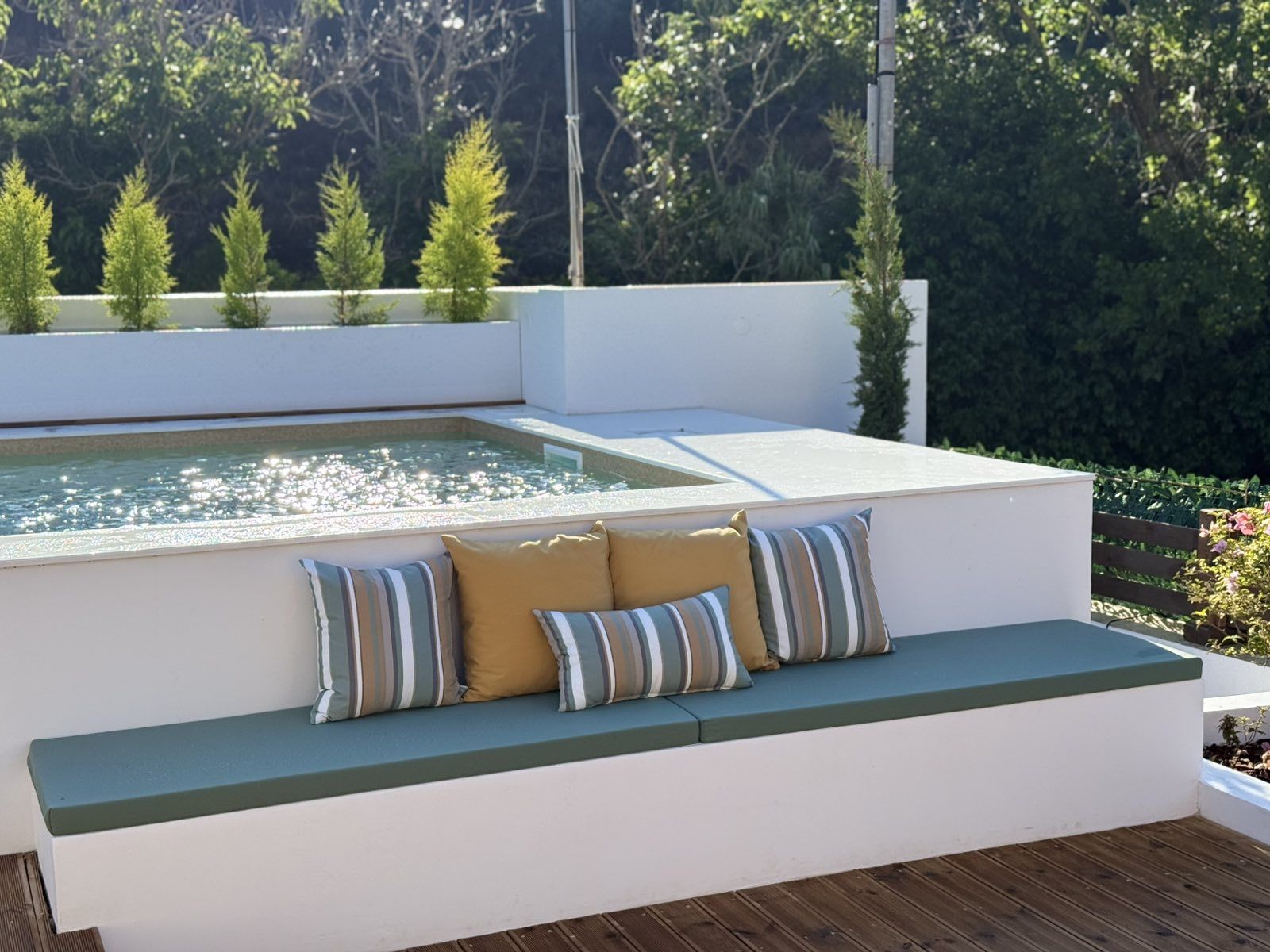

Wood or composite
Natural decking wood is usually a tropical hardwood or pine that has been impregnated or heat-treated. Composite (WPC) is a blend of wood fibres and polymers, in boards with a stable colour. Both do well next to water, but they behave differently in the sun, over time and in terms of care.
| Natural wood | Composite | |
|---|---|---|
| Look | Lively, every board different; turns grey if not oiled | Uniform, the colour stays fairly stable |
| Underfoot | Stays cooler in the sun | Gets hotter, especially in dark colours |
| Maintenance | Oiling usually once a year, checking for splinters | Washing, no oiling |
| Movement | Swells and shrinks with moisture | Expands with heat, needs gaps at the ends |
| Splinters | Possible if not maintained | Does not splinter |
If you want minimal care, composite in a light shade is the most relaxed choice. If you value natural texture and a cool feel underfoot, wood is worth it, provided you oil it. A practical test: ask for samples and leave them in the sun in your garden for a day before you decide.
Ventilation and substructure
A deck never rests directly on the soil. The boards are fixed to joists, which sit on firm, level supports. There must be a gap underneath so that air circulates and the deck dries after every wetting. Without ventilation, wood rots and composite gets mouldy and warps.
- Leave a small gap between the boards for water and expansion.
- Give the ground under the deck a slight fall so water does not pool.
- Lay a weed-control geotextile.
- Use stainless steel screws or hidden clips, because chlorinated water corrodes ordinary metal.
- Allow for an access hatch if pipework runs underneath or the plant room is there.
Decking for a raised pool
With a raised prefab pool, which can stand up to 1 m above natural ground level, a deck solves two things at once. It is built at the height of the pool edge, so you can sit and lie down next to the water, and it hides the outer walls. A few steps lead up from the garden. The deck's support should preferably be independent of the panels and designed together with the pool, so that it does not put pressure on the walls. On sloping plots, the deck can also bridge the difference in height between the pool and the house.
Safety and care
- Choose grooved or non-slip boards where you get out of the water.
- Wash the deck with water and a soft brush. Green growth in shady spots makes it slippery.
- Wood needs oil when water stops beading on the surface, usually before the season.
- Do not rinse the deck towards the pool; its water should end up in the garden, not in the filter.
In very sunny spots, composite decking in a light shade or shade over the sun loungers makes a big difference. If you are thinking of stone or tiles for part of the area, see paving around the pool. We discuss the options for the area around the pool at the site survey, together with the pool itself.
Questions
How often does a wooden deck need oiling?
Usually once a year, before summer, and more often in spots with a lot of sun or constant wetting. Left without oil, wood takes on a silver-grey colour and dries out faster.
Can the deck go right up to the pool water?
Yes, it can go up to the pool edge, while in an overflow pool it meets the overflow grating. The last board must be firmly fixed and must not block the inlets or access to the ladder.
See also


Paving around the pool
Paving around the pool: stone, marble or tiles, slip resistance for bare feet, how hot each material gets and…


Raised pool
A raised or semi-above-ground prefab pool up to 1 m: when it suits, how to clad the outer walls in timber or…


Pool shade
Shade for your pool with a pergola, umbrellas or shade sails: how to give people shade while leaving the…