The overflow channel grating: materials, corners and care
The grating covers the overflow channel, is about 25 cm wide and is the first thing you step on when you get out of the water. It comes in plastic or marble and affects the look, the safety and the maintenance.

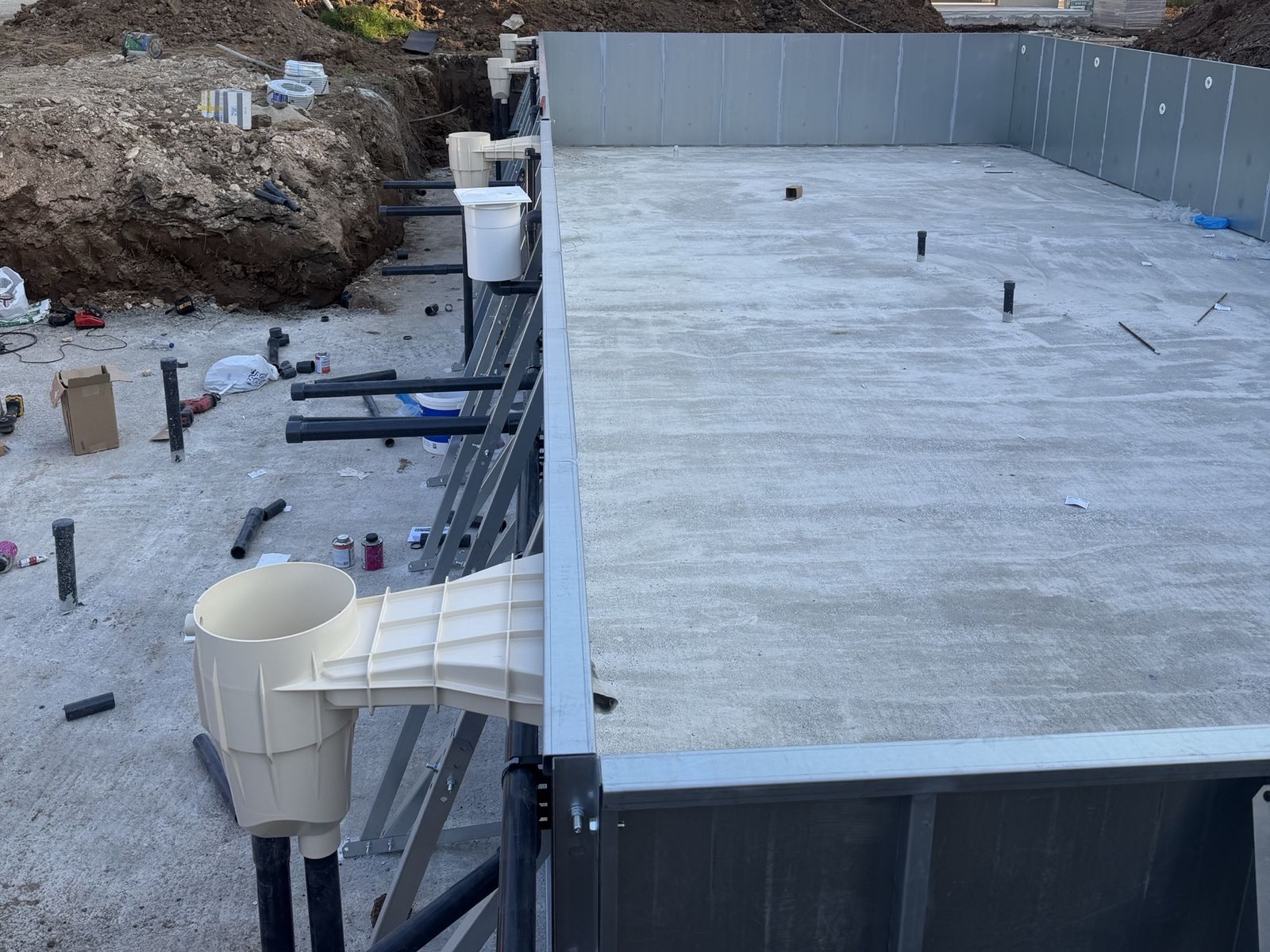

What the grating does
In an overflow pool, the water spills over the edge and falls into a channel that runs around the pool. The grating covers it: it lets the water through, keeps out feet, toys and large leaves, and creates a continuous surface between the water and the paving. From the channel, the water ends up in the balance tank.
Because people walk on it barefoot and it is always wet, the grating must be non-slip, resistant to chlorine and sun, and easy to lift out for cleaning. It must also sit firmly in place, without rocking or lifting when someone puts their weight on one end. An even overflow does not depend on the grating but on the edge underneath, which must be perfectly level along its whole length.
Plastic or marble
| Plastic | Marble | |
|---|---|---|
| Form | Small pieces that clip together into a continuous strip | Pieces of marble with grooves or slots for the water |
| Appearance | A clean, uniform line around the water | Continues the paving and ties in with the surroundings |
| Corners and curves | Follows them easily, with corner pieces | Needs precise cutting on site |
| Cleaning | Lifts out in sections or rolls up | Heavier pieces, lifted one by one |
| What to watch | Over the years it may change shade in strong sun | Marble is sensitive to acidic cleaners and low pH |
A plastic grating suits any shape and is easy to replace. Marble is preferred when the paving around the pool is marble too and you want a seamless look. Either way, marble needs an unpolished, non-slip finish.
Corners and changes of direction
Corners are where the quality of the work shows. A plastic grating uses special corner pieces, so the strip turns without gaps that can catch toes. With marble, the pieces are mitre-cut and fitted precisely. An L-shaped pool or one with recesses has more corners, so the grating comes into the design at an early stage. See also pool shapes.
Colour
- White: a clean, bright line that stays cooler underfoot, but shows dust and stains.
- Grey or beige: goes well with stone and wood and hides dirt better.
- The same colour as the paving: the grating almost disappears and the water seems to meet the paving directly.
Dark colours get very hot in the summer sun. The available shades depend on the material, and we look at them together at the site survey, next to the liner colour.
Cleaning
- During the season, rinse the grating with water and a soft brush, without acidic or abrasive cleaners.
- Every few weeks, lift a section and look into the channel. Leaves, hair and greasy sunscreen residue collect there and make surfaces slippery.
- Pick out anything large by hand and brush the channel, so the debris does not go back into the pool.
- At the end of the season, clean the grating, channel and tank together.
The general pool cleaning guide gives the order of jobs for the whole pool.
Questions
Is it safe to walk barefoot on the grating?
Yes, the grating is made to be walked on. Choose a non-slip pattern and a light shade, which heats up less, and keep it free of greasy residue, because that makes it slippery.
Can the grating be replaced on an old overflow pool?
Yes. A plastic grating can be replaced without any work on the pool itself, as long as the new one fits the width of the channel. It is often done together with other renovation work.
See also


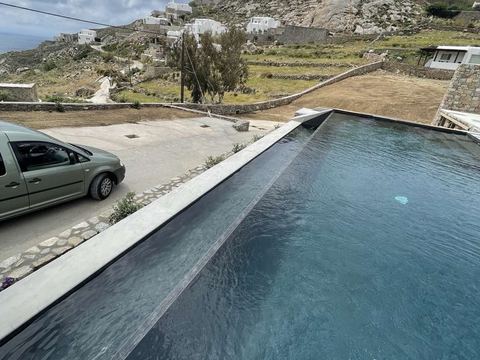

Overflow pool
A prefab overflow pool with a perimeter channel and a 25 cm plastic or marble grating. The water reaches the…
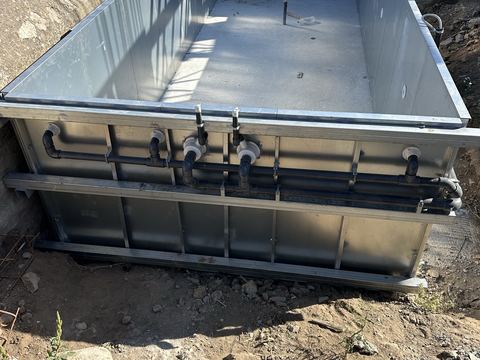


Balance tank
The balance tank in an overflow pool: what it does, how its volume is worked out, how the water level is…
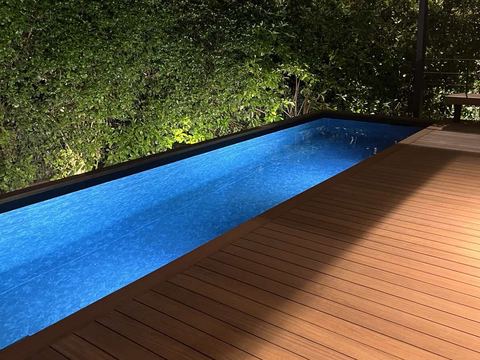


Paving around the pool
Paving around the pool: stone, marble or tiles, slip resistance for bare feet, how hot each material gets and…