Your pool's fittings and what each one does
Water leaves through the fittings towards the filter and comes back clean. The skimmer collects from the surface, the main drain from the floor, the return inlets distribute the clean water and the vacuum point is there for cleaning.


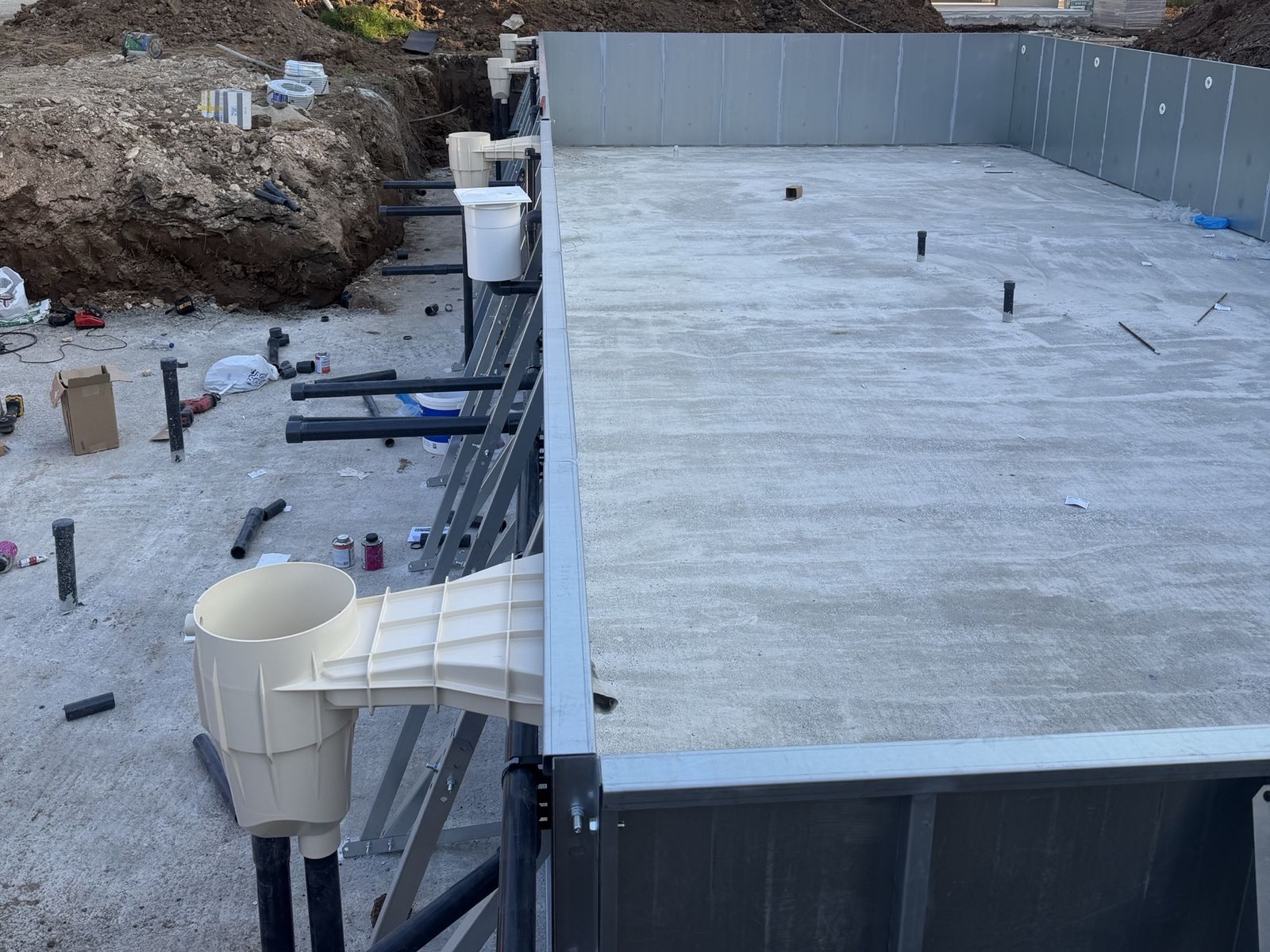
The fittings at a glance
| Fitting | Where it is | What it does |
|---|---|---|
| Skimmer | In the wall, at the waterline | Draws in surface water with leaves, dust and oils, which collect in a basket |
| Main drain | At the deepest point of the floor | Draws from below and moves the water at the bottom |
| Return inlets | In the walls, below the water level | Return the filtered water and keep the whole body of water moving |
| Vacuum point | In the wall, below the water level | Connection for the manual vacuum hose |
An overflow pool has no skimmers: their job is done by the edge, which the water spills over. The number of skimmers and return inlets depends on the surface area, the shape and the pump's flow rate, and is set when the pool is designed.
What each fitting does
Skimmer
The skimmer does most of the work in a skimmer pool. A flap (weir) at its mouth lets through a thin layer from the surface, where most of the dirt is, and stops debris from floating back out when the pump switches off. It goes on the side towards which the prevailing wind pushes the surface, so leaves drift to it on their own. The water level should be about halfway up the opening: too low and the pump sucks in air; too high and the flap does not work.
Main drain
The main drain draws water from the deepest point, where the water stays colder and moves less. With the valves in the plant room you split the suction between the main drain and the skimmer; in summer you usually give most of it to the skimmer, which cleans the surface. The main drain is also used for partial water changes, since a liner pool is never emptied completely.
The drain cover must always be intact and securely fixed. If it breaks or is missing, switch off the pump and do not allow swimming until it has been replaced, because the suction can trap hair or limbs.
Return inlets
Return inlets are round fittings with an adjustable nozzle. They are placed opposite or diagonally across from the skimmers, so the clean water crosses the whole pool and there are no dead zones without circulation. Point the nozzles slightly downwards and all in the same direction: this creates a slow rotation that pushes the surface towards the skimmers.
Vacuum point
The vacuum point is a separate suction fitting where you connect the manual vacuum hose. Where there isn't one, the vacuum usually connects to the skimmer with a special plate. If you use a robotic pool cleaner, which has its own pump and filter, the vacuum point gets used less often.
Watertightness and checks
In a liner pool, every fitting clamps the liner between a flange and gaskets. This is where watertightness is won or lost, which is why the position of the fittings is decided before the liner goes in and is not easy to change later. Every so often, check:
- that all the flange screws are in place,
- that the skimmer baskets and flaps are not broken,
- that the main drain and vacuum point covers are intact,
- that no wrinkles or discolouration appear in the liner around the fittings.
Questions
How far do I lower the water level in winter relative to the fittings?
Below the skimmers, so no water is left in their housings and pipework, where it could freeze. You will find the remaining steps under closing the pool for winter.
Why is the pump sucking air through the skimmer?
Usually because the water level has dropped below the middle of the opening, or because the basket is full and the flap has stuck. Top up the water, empty the basket and, if the problem persists, check the lid of the pump's pre-filter.
See also


Water circulation
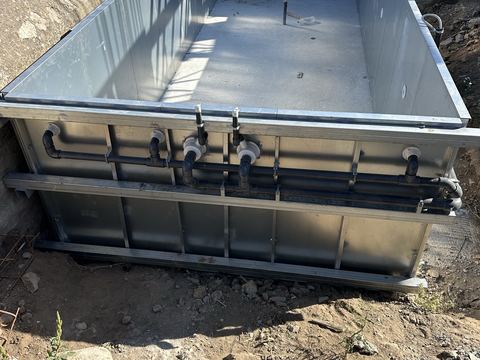
Pool water circulation: turnover time, the route from skimmer to pump, filter and return inlets, where the…


Skimmer pool
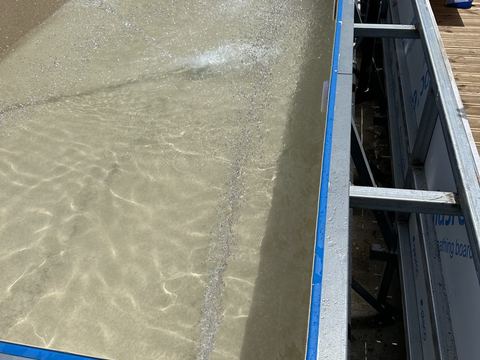
A prefab skimmer pool needs no overflow channel and no balance tank, so it costs less to build. Ideal for…


Pool watertightness
Watertightness of a prefab pool: how the liner provides it, how skimmers, return inlets and lights are…