How water circulates in your pool
Pool water stays clean because it passes continuously through a closed circuit: it leaves through the skimmers or the channel, is filtered, disinfected and returned. The more evenly it moves, the fewer problems you have.


Turnover time
Turnover time is how long it takes for the whole volume of the pool to pass through the filter once. You get it by dividing the volume by the pump's actual flow rate.
Example: an 8×4 m pool with a water depth of about 1.40 m holds around 45 m³. With a flow of about 7.5 m³/h, the volume is turned over in about 6 hours. In home pools the turnover is usually designed to take a few hours, and the pump runs long enough for one or more turnovers a day, depending on the heat and how much the pool is used. How the hours are split is covered under pump running hours.
One turnover does not mean all the water has been filtered, because clean water keeps mixing with the rest. That is why how well the water moves within the pool also matters.
The water's route
Skimmer pool
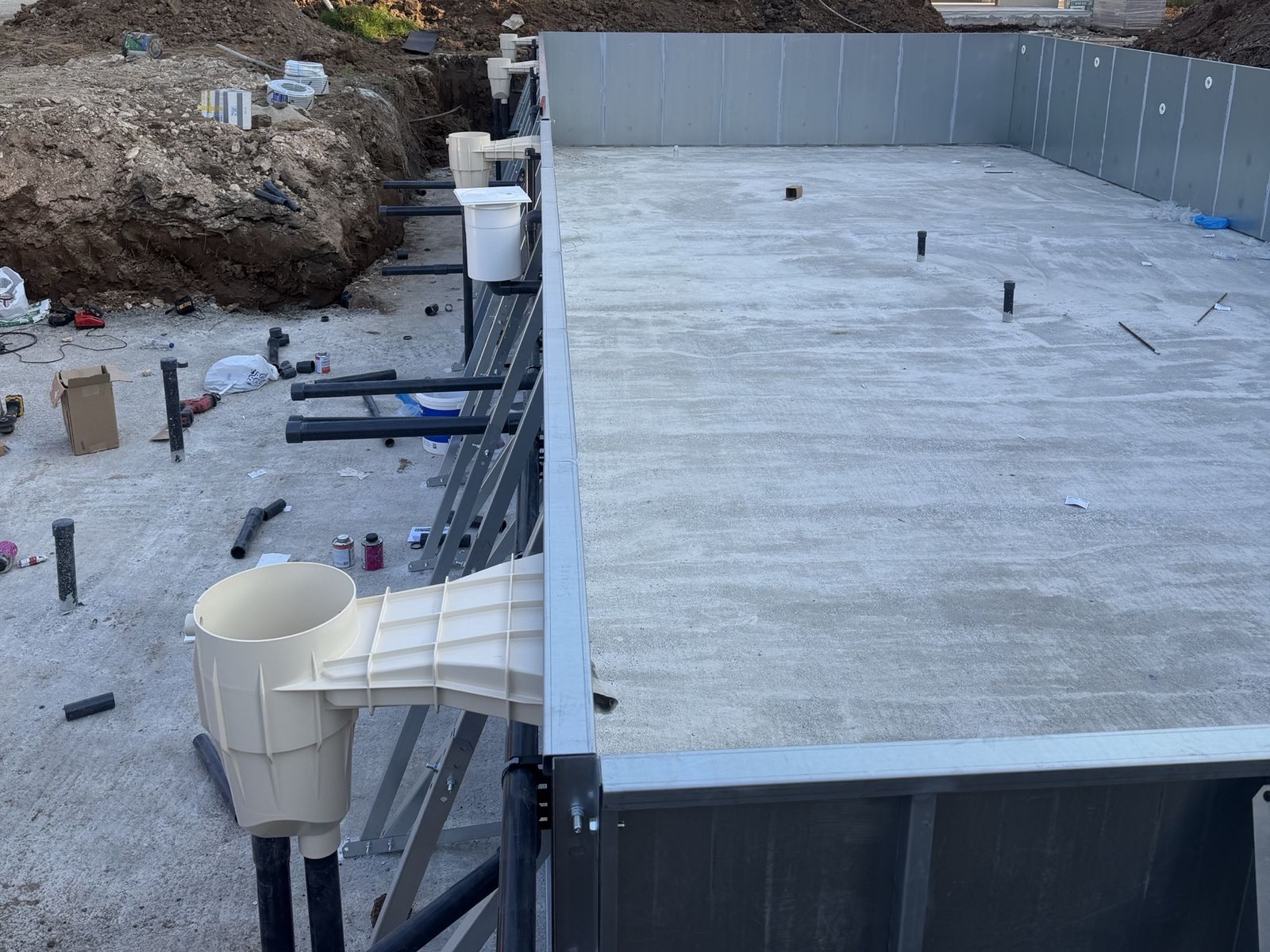
- Skimmer and main drain: the skimmers, at the waterline, collect the surface layer with leaves, insects and oils. If there is a main drain, it also draws water from the floor.
- Pre-filter and pump: the pump basket catches the larger debris, and the pump provides the pressure.
- Filter: holds back fine particles; see pool filters.
- Heating and disinfection: where fitted, they go after the filter, so they receive clean water.
- Returns: inlets in the walls that send the water back into the pool.
This setup is described in detail under skimmer pools.
Overflow pool
Here the water spills over along the whole perimeter, drops through the grating into the channel and collects in the balance tank. From there the pump sends it through the filter and returns it through inlets low in the walls or in the floor. The surface is cleaned evenly along its entire length, which suits large pools and holiday accommodation.
Where the inlets go
The position of the inlets is decided at the design stage, before the panels are set up. The basic principles:
- Return inlets usually go on the opposite side from the skimmers, so the water crosses the whole pool.
- The adjustable nozzles point slightly downwards and all in the same direction, to create a slow rotation.
- Skimmers work best on the side where the prevailing wind pushes the leaves.
- Long, narrow pools need more inlets, spread along the whole length.
You will find what each one does under pool inlets and fittings.
Dead zones
Dead zones are spots where the water barely moves: corners, built-in steps, benches, the area behind the ladder, the floor below the skimmers. That is where dust settles, chlorine struggles to reach and algae usually start. You deal with them through:
- correctly aimed nozzles;
- regular brushing of these spots;
- a robot or vacuum that covers the floor and walls;
- enough pump running hours, especially in hot weather.
If the water always turns cloudy or green in the same spot, the cause is usually circulation, not chemistry.
Questions
Should the return inlets point towards the surface?
Usually not. They point slightly downwards and all in the same direction, so they also mix the deeper layers. Angling one return slightly upwards only helps if you want it to push leaves towards the skimmer.
How can I tell if the water is circulating properly?
With the pump running, put a few drops of pool test dye in a corner or on the steps and see whether it moves away quickly. If it stays put, that spot needs better-aimed nozzles or more frequent brushing.
See also

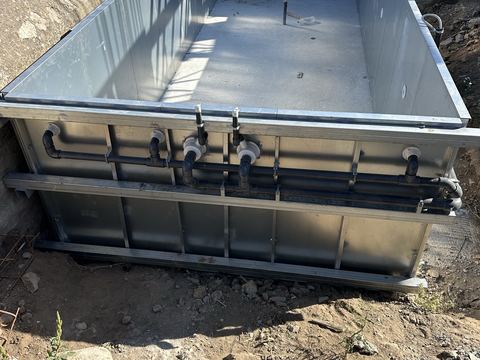


Pool fittings
Pool fittings explained: what the skimmer, return inlets, main drain and vacuum point do, where they go and…

Pool filter
Sand, glass media or cartridge pool filters: how each one works, how to choose the size and what the pressure…
Pump running hours
How many hours your pool pump needs to run: the turnover cycle, setting the timer by season, which hours of…