A pool in an established garden: how to do it without damage
In an established garden, a prefab pool goes in with less upheaval than you might fear, as long as you plan ahead the route for the machinery, how to protect plants and paving, and where the soil will go.

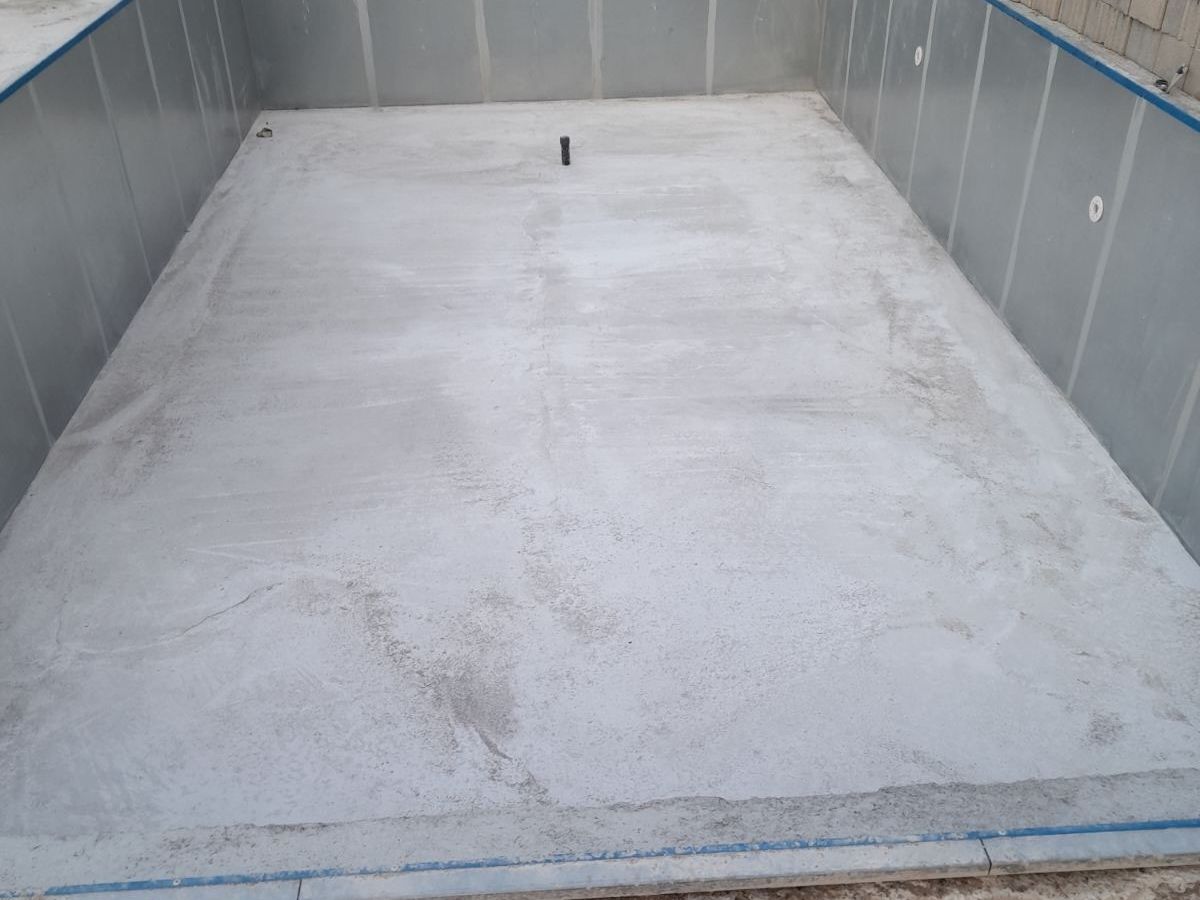
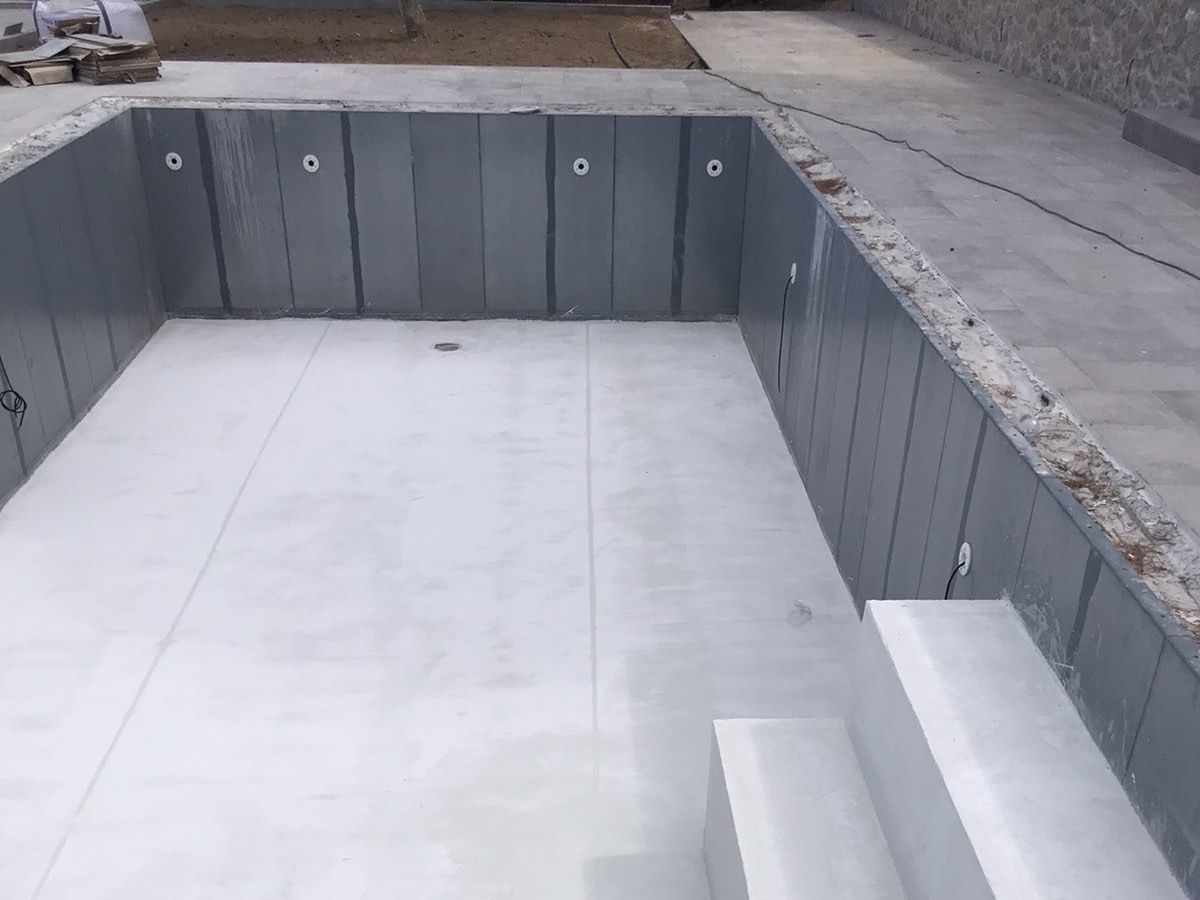
Access: what gets through where
In a garden that already has plants, paving and fencing, the first question is not the shape of the pool but how materials and machinery will get there. The panels of a prefab pool are carried in one by one, so they pass through doors, narrow passages and stairs. The most demanding item is usually the excavator.
During the site survey we measure and check:
- the width and height of the passage all the way to the pool spot,
- steps, slopes and overhanging branches along the route,
- anything buried, such as a septic tank, irrigation pipes, cables or tanks,
- whether the ground along the route can take the weight of the machine.
If not even a small machine can get through, the alternatives are discussed on site. For the other aspects of digging, see pool excavation.
Protecting plants and paving
Most problems in an established garden do not come from the pool itself but from the route the works take. A little preparation saves a lot of damage:
- Move any plants on the pool spot or along the route into pots, ideally in the cool season.
- Tie up low tree branches and protect the trunks with boards.
- Cover paving and marble with thick sheets or boards wherever machinery and wheelbarrows will pass.
- Mark the irrigation lines and switch off the automatic sprinklers in the work zone.
Watch out for roots too: a large tree very close to the excavation can lose part of its root system, and over the years roots go looking for the moisture around the pool. This is also a factor in choosing where to put the pool in your garden.
The excavated soil
Soil dug out of the ground takes up more space than it did in the ground, because it loosens. In a small garden that means you need a plan for where it will go, even for just a few days.
| Option | When it suits |
|---|---|
| Removal by truck | Small garden, no space or use for the soil |
| Reuse in the garden | Small levelling jobs, flower beds, gentle mounds, always keeping the approval limits in mind |
| Temporary storage | When part of the soil will be reused around the pool |
Wherever it sits temporarily, it is a good idea to lay plastic sheeting or geotextile underneath, to protect the lawn and make it easy to clear up. Under the small-scale approval, excavation and backfill do not exceed 1 m, and your engineer checks this.
Before work starts
- Let your neighbours know about trucks, noise and working hours.
- Arrange a parking spot for the truck near the entrance.
- Decide in advance where the plant room will go and which way the pipes and the power cable will run through the garden.
- Keep children and pets away from the open excavation, with temporary fencing if needed.
After the pool: restoring the garden
Wherever machinery has passed or soil has been piled, the lawn will almost certainly need reseeding. This is a good moment to rethink the garden around the water: which plants to keep close, which to move further away, where the paving will go. You will find ideas under plants around the pool and pool surrounds and paving.
Questions
How narrow can the access be for the pool to be built?
The panels are carried in one by one and pass through doors and hallways. The critical factor is usually the excavator, which is why the access is measured during the site survey.
Will my lawn be ruined?
Wherever machinery passes and soil is piled, the lawn will almost certainly need restoring. Plan a fixed work route in advance and reseed at the end.
See also


Pool excavation
Pool excavation: what changes in loose, clay or rocky ground, groundwater, where the soil goes, machine…


Garden placement
Where to put a pool in your garden: sun, wind, trees, the view from the house, distance to the plant room and…

Pool for a new house
A pool for a house under construction: coordination with architect and engineer, power and water supply,…