Excavating for a prefab pool: what to know before the digger arrives
The excavation for a prefab pool is slightly larger than the pool itself and as deep as the panels require. How easily it goes depends on the ground, the access and where the soil will go.

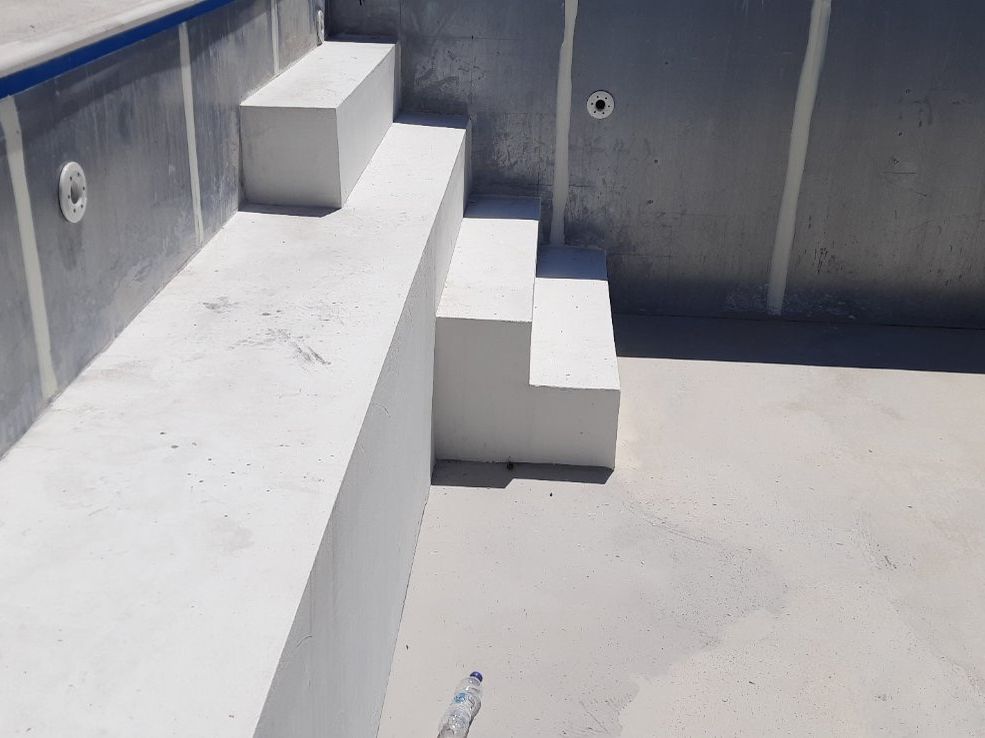

How much we dig
The pit is dug slightly larger than the pool, so there is room to set up the panels, the support buttresses and the pipework. The depth follows the height of the panels, 1.10 m or 1.50 m, plus the base. If the pool is not fully sunk but rises partly above ground, the excavation is smaller to match; see the raised prefab pool.
A practical point that is often forgotten: soil "bulks up" once it is dug and takes up noticeably more volume than it did in the ground. The heap you see in the garden will be bigger than the pit.
What changes with the type of ground
| Ground | What happens | What we watch for |
|---|---|---|
| Loose or sandy | The sides of the pit collapse easily | Gently sloped sides, a quick move from excavation to assembly |
| Clay | Swells when wet and shrinks as it dries | Drainage, so water does not pool around the pool |
| Rocky | Needs breaking with a hydraulic breaker | More time and noise, consider a partly raised pool |
| Old fill or rubble | Not a stable base | Removal down to natural, firm ground |
The type of ground usually shows itself in the first few scoops of the bucket. That is why, however careful the site survey, a rock or a vein of water may only appear during the excavation.
Groundwater
On plots near the sea, near streams or in low-lying spots, the pit may fill with water. Then it needs pumping for as long as the work lasts, and often permanent drainage around the pool. This matters later too: groundwater pressure is one of the reasons a liner pool is never emptied completely. See why we do not empty a liner pool.
Soil and machine access
The soil is either taken away by truck or stays on the plot. Some of it can be used for landscaping the garden, and good topsoil is worth keeping separately for planting. You do need a temporary storage spot, though, one that does not get in the way of the work and does not wash out onto the road or the neighbour's plot in the first rain.
Before the digger arrives, check:
- the width and height of the entrance, including gates, railings and overhanging branches,
- whether the ground along the route can take the weight or needs protecting,
- whether a truck can park close to the excavation,
- where underground cables, pipes and ducts run.
Mini diggers work in narrow yards, and in extreme cases part of the work is done by hand. How plants and paving are protected is covered in a pool in an existing garden.
The 1 m limit under the small-scale works approval
A pool can be up to 1.5 m deep under a small-scale works approval. One of the other conditions concerns the landscaping of the plot: excavation or filling of the ground must not exceed 1 m. This matters if you are thinking of raising the garden level with the soil from the pool, or if the plot slopes. The engineer confirms how it applies in your case before work starts. For sloping plots, see a pool on a sloping plot.
Questions
What happens if we hit rock during excavation?
It is broken up with a hydraulic breaker on the digger, which takes longer and is noisy. If the rock is extensive, one solution is to raise the pool partly above ground, by up to 1 m, so less digging is needed.
Can the soil stay on the plot?
Yes, partly, for landscaping the garden. Expect it to take up more space than you think, and if you want to raise the ground level, check the 1 m filling condition with the engineer first.
See also


Sloping plot
A pool on a sloping plot: a levelled terrace, a partly raised pool up to 1 m, diverting rainwater from the…

Raised pool
A raised or semi-above-ground prefab pool up to 1 m: when it suits, how to clad the outer walls in timber or…

Step-by-step construction
Prefab pool construction step by step: site survey, paperwork, excavation, panels, pipework, liner and…