The shower by the pool: why it matters, where it goes and how it drains
A quick rinse before swimming washes off sunscreen, sweat and dirt that would otherwise end up in the water. Less dirt means less chlorine, less smell and a cleaner waterline on the liner.
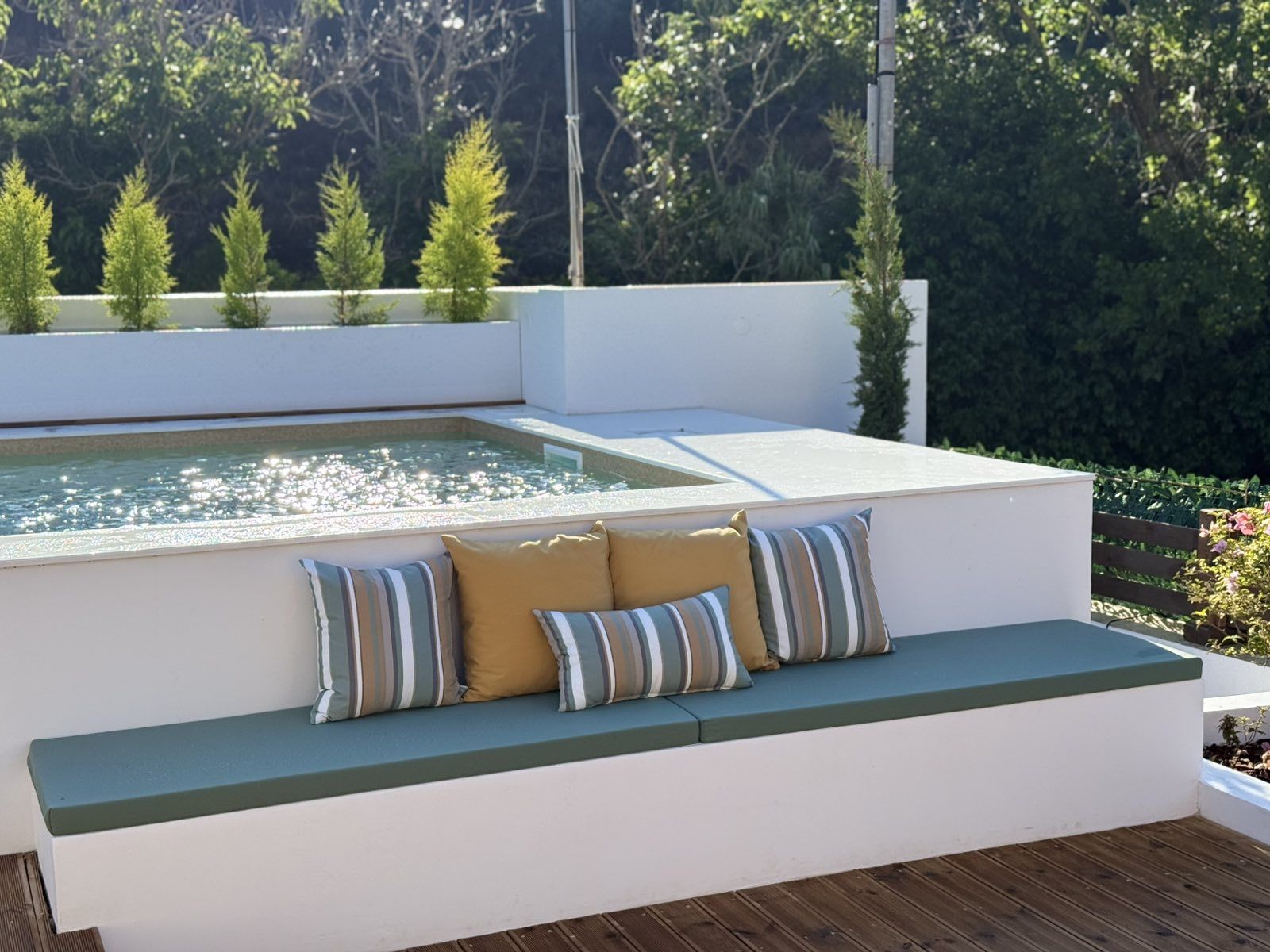


Why the shower protects the water
Every swimmer brings sweat, skin oils, sunscreen, cosmetics and dirt from their feet into the pool. Chlorine reacts with these substances and part of it turns into chloramines, the compounds that give off that strong "pool" smell and make eyes red. So the smell does not mean too much chlorine, it means too much dirt, as we explain in chlorine smell and red eyes.
Oils and sunscreen float and settle at the waterline, where they form the familiar slippery band on the liner. More on preventing it in stains on the liner.
A rinse of a few seconds before you get in noticeably reduces this load. The chlorine lasts longer, the filter gets dirty more slowly and the water stays more pleasant. After swimming, the same shower rinses the chlorine off skin and hair.
Types of shower
| Type | How it works | What to watch for |
|---|---|---|
| Simple garden shower | Cold water from the garden supply | The simplest option; for the first few seconds the water in the hose can be very hot from the sun |
| Solar shower | A tank in the shower column heats the water with the sun | Lukewarm water with no electricity; needs a spot that gets sun for most of the day |
| Shower with mixer | Connected to the house hot water | More plumbing work, but comfortable in spring and autumn too |
| Foot bath | A shallow basin or foot tap at the entrance to the pool area | Keeps soil and grass out of the water; ideal when there is a lawn |
Where it goes
- On the way to the pool entry, so you pass it naturally before the steps, not in a corner that needs a detour.
- Far enough from the edge that its water does not fall into the pool, but not so far that people cannot be bothered to use it.
- In a sunny spot, if it is a solar shower, and preferably with some privacy from neighbours and the road.
- Close to a water supply, for simple, short pipework.
The shower is one of the points that shape the paths through the garden, so it is worth thinking about together with the overall garden design.
Drainage and flooring
Shower water must not end up in the pool. The floor under the shower slopes outwards, towards a drain, a gravel bed or a bed of plants that like moisture. If people will use shower gel, it is better to connect the drainage to the sewer.
The surface needs a non-slip material that does not burn your feet, since this is where wet, bare feet walk. The options are described in paving around the pool.
In areas with frost, drain the shower pipework in winter, just as you do with the pool pipework.
Make it a habit
One simple rule for everyone, and especially for guests: shower first, then the water. Children learn it quickly when the shower is in their way. In holiday rentals a small sign next to the shower helps, along with the rest of the pool rules.
Questions
Does the pool shower need a drain connection?
For a simple rinse without soap, a proper slope towards a gravel bed or a planted bed is usually enough. If people will use shower gel or shampoo, connecting it to the sewer is the best solution.
How warm does a solar shower get?
It depends on the sunshine, the time of day and the size of the tank. In summer it usually gives lukewarm to warm water after a few hours of sun, while early in the morning or on cloudy days the water is cool.
See also



Garden design
Garden design with a pool: how to set out zones for swimming, loungers, shade and dining, where the paths run…


Chlorine smell
A chlorine smell and red eyes at the pool do not mean too much chlorine but chloramines. How to test for…

Paving around the pool
Paving around the pool: stone, marble or tiles, slip resistance for bare feet, how hot each material gets and…