How to design the garden around your pool
A garden with a pool works well when every use has its place: the water, sun for the loungers, shade, a table, and clear paths in between. Getting the zones in the right order also keeps the water cleaner.
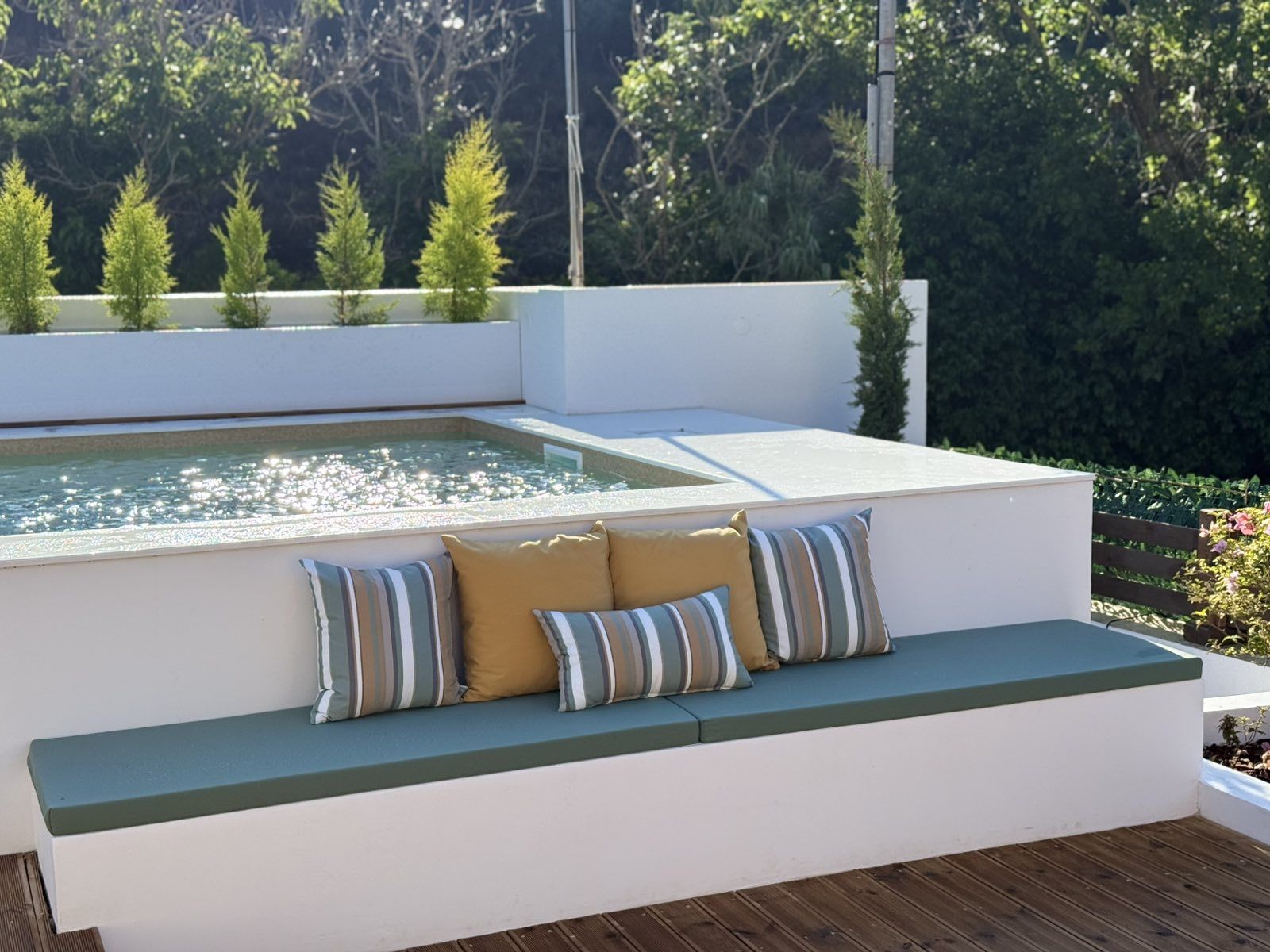


The zones of a garden with a pool
Before you choose materials and plants, sketch the uses on a piece of paper. Each zone has different needs for sun, shade, paving and distance from the water.
| Zone | Where it goes | What to watch for |
|---|---|---|
| Swimming | In the sunniest spot, visible from the house | The position of the pool decides everything else |
| Loungers | Along one long side of the pool, with afternoon sun | Enough depth so people can walk past in front of them without tripping |
| Shade | A pergola or trees at a distance from the water | Leaves and flowers should not fall into the pool |
| Dining and barbecue | Closer to the house and the kitchen than to the water | Smoke, grease and glasses kept away from the pool |
| Shower | On the way to the pool steps | Drainage away from the water |
| Plant room and storage | Hidden but easy to reach | Noise kept away from bedrooms and the living room |
| Children's play | Visible from the loungers and the house | At a distance from the pool edge |
If the pool has not been built yet, start with where to put the pool in the garden; the other zones fall into place around it.
Paths: dry and wet
Think of two networks. The dry one links the house to the table, the shade and the storage: here people walk in shoes, carrying plates. The wet one runs from the shower to the pool and from there to the loungers: here people walk with bare, wet feet.
The less they cross, the less water gets into the house and the less dirt gets into the pool. On the wet paths you want a material that is not slippery and does not burn your feet. The options are described in paving around the pool.
Always leave a strip of paving around the edge. A lawn that runs right up to the water brings in grass clippings, soil and fertilizer, which feed algae.
Plants and shade
Plants define the zones and give privacy and coolness, but they also bring leaves. Keep large deciduous trees away from the water, and close to it choose evergreens that shed few leaves and have gentle roots. Details in plants around the pool.
Set up the irrigation so the sprinklers do not spray into the pool. Shade goes where people sit, not over the water, which needs sun to warm up; see pool shading.
Lighting at night
- Paths and steps: low-level light so people can move around safely.
- In the pool: light that shows off the water and lets you see the bottom. Options in pool lighting.
- Dining area: warm, low light, which usually attracts fewer insects.
- Direction: light aimed downwards, so it does not dazzle anyone or bother the neighbours.
The order of the work
First the pool is built with its pipework and electrics, then the cables for the lighting and the supply for the shower go in, then the paving is laid, and finally the garden is planted. That way nothing has to be ripped up for a forgotten cable.
Questions
How much space should I leave around the pool?
On the lounger side you need enough depth for the lounger plus a walkway in front of it, usually around 3 m. On the other sides a strip of paving wide enough for comfortable, safe walking is enough.
Can the lawn run right up to the pool edge?
Better not. A strip of paving between the lawn and the pool keeps out grass, soil and fertilizer and gives you firm footing as you get out of the water.
See also


Garden placement
Where to put a pool in your garden: sun, wind, trees, the view from the house, distance to the plant room and…


Paving around the pool
Paving around the pool: stone, marble or tiles, slip resistance for bare feet, how hot each material gets and…


Pool shade
Shade for your pool with a pergola, umbrellas or shade sails: how to give people shade while leaving the…