Polyester panels: the alternative to a steel frame
Polyester panels are prefab pool walls made from a synthetic material that does not rust. They are an option for specific conditions, not an upgrade for every pool, and the recommendation is made at the site survey.

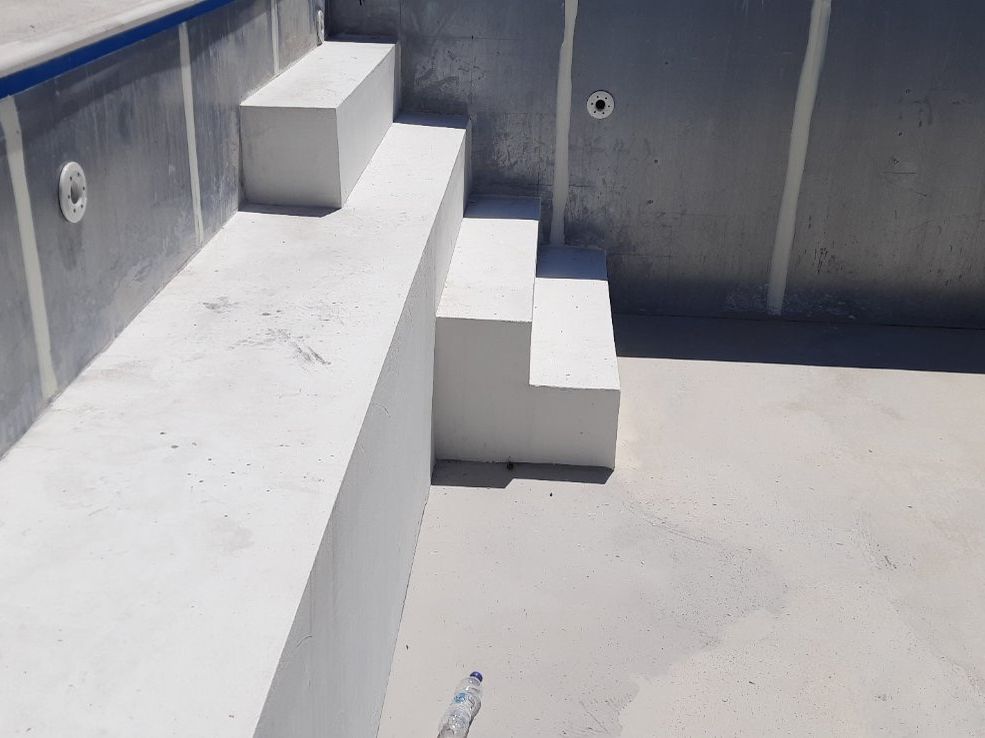

What polyester panels are
In a prefab pool, the walls are ready-made panels joined on site. Most are galvanized steel. There is also the option of panels made from polyester, a fibre-reinforced synthetic material, which plays the same role: it forms the frame on which the liner is fitted.
The key difference is the material. Steel is protected from corrosion by galvanizing, while polyester does not rust by its nature. Everything else, that is waterproofing, filtration and maintenance, stays the same.
In the finished pool, you cannot see the difference. The walls are hidden behind the liner on the inside and behind the soil, the paving or the perimeter slab on the outside. Even in a raised prefab pool, the outside is clad in timber or stone, so the frame material does not affect the look.
Compared with steel panels
| Criterion | Steel panels | Polyester panels |
|---|---|---|
| Material | 2 mm galvanized steel | Fibre-reinforced polyester |
| Corrosion protection | Galvanizing, hot-dip galvanized buttresses | The material does not rust |
| Waterproofing | PVC liner or membrane | PVC liner or membrane |
| Circulation | Skimmer or overflow | Skimmer or overflow |
| When chosen | In most pools | When ground conditions justify it |
The specifications of the steel frame, with its anchors, bolts and buttresses, are set out in the article on steel pool panels.
When they are considered
Galvanized panels comfortably handle the usual conditions in a garden. Polyester panels come into the discussion when the pool's surroundings are harder on metal:
- A plot very close to the sea, with salt in the air and the ground.
- Ground that stays wet for much of the year, or a high water table, which usually shows during the pool excavation.
- A site where drainage around the walls cannot be done ideally.
None of these automatically leads to polyester. Many seaside pools, including on the islands, are built with a galvanized frame and proper drainage. The decision is made after seeing the specific plot.
What does not change with polyester
- The lining. The water only touches the liner or membrane, so the colour options and the care of the lining stay the same.
- The equipment. The pump, filter and plant room are chosen based on volume and use, not on the wall material.
- The paperwork. The engineer checks the conditions for the small-scale works approval in the same way.
- Water chemistry. pH, chlorine, backwashing and winter closing are done as in any liner pool.
What to ask at the site survey
- Why is this material recommended for my plot?
- How will rainwater be drained away from around the walls?
- Are there signs of damp or groundwater at the spot?
- Does anything change in the layout of the inlets or the shape with one material or the other?
- How will the panels be carried to where the pool will be?
It is a good idea to have the answers and the agreed material recorded in writing, along with the rest of the pool specifications.
Questions
Are polyester panels better than steel ones?
There is no material that is better across the board. Steel is the usual solution, while polyester is considered when ground conditions justify it, and the recommendation is made at the site survey.
Does maintenance change with polyester panels?
Not really. The water only touches the liner, so water chemistry, filtration and winter closing are done in the same way.
See also
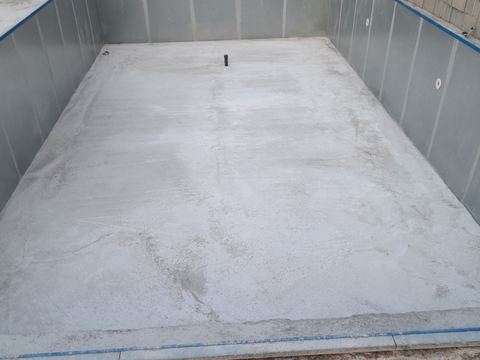

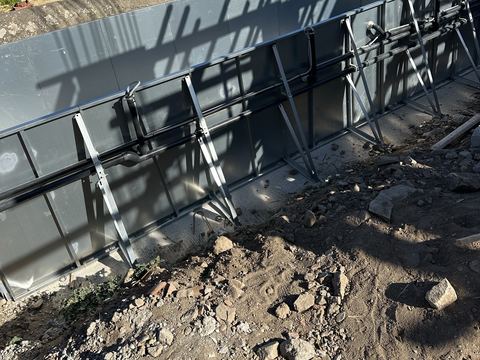

Steel pool panels
Steel pool panels in 2 mm galvanized steel: how they are anchored and joined, what the support buttresses do…

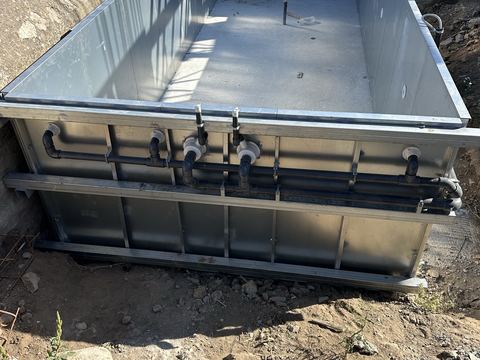

Prefab pools
Prefab pools with 2 mm galvanized panels, 1.10 or 1.50 m high, and a PVC liner with a written 10-year…


Pool lifespan
How many years a prefab pool lasts: what the frame withstands, when the liner is renewed, what wears out the…