How long it takes to build a prefab pool
The total time splits into three parts: the engineer's paperwork, the work on site and filling. The work on a prefab pool moves quickly; time is usually lost before it starts and around it.
In short: The time to build a prefab pool splits into three parts: the engineer's paperwork, the work on site and filling. The work itself moves quickly because the panels arrive ready-made; delays usually come from missing property details, rock or water in the pit, difficult access, rain and changes along the way.


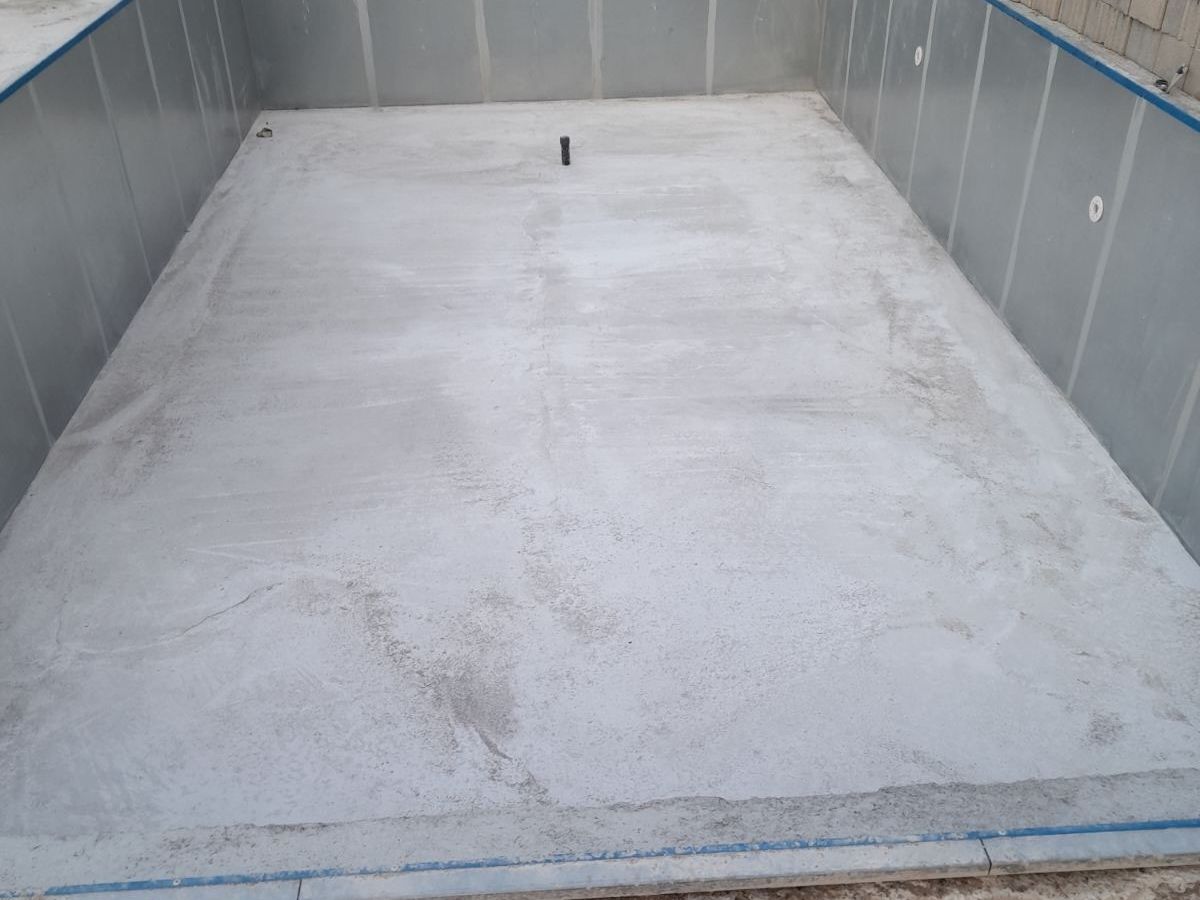
The three parts of the timeline
When you ask “how long will it take?”, you are really asking about three different things, each with its own pace.
| Stage | What it depends on | What delays it |
|---|---|---|
| Paperwork | Type of approval, the engineer's workload, how complete the property details are | Missing details, design changes, a pool of 50 m² or more |
| Work on site | Size, ground, access, equipment choices | Rock, water in the pit, narrow access, rain, changes along the way |
| Filling | Water volume, mains supply or water tanker truck | Low pressure, few water tanker runs available in summer |
Paperwork: the part that starts first
No work begins before the engineer's declaration. The small-scale works approval is a simpler procedure than a building permit, which is needed for pools of 50 m² or more and requires studies and more time. The engineer needs complete property details; if something is missing or needs updating, the timeline grows before a machine has even set foot on the plot.
Work on site: fast, but with conditions
Prefab pool panels arrive ready-made and are assembled on site, so under normal conditions the work is the most predictable part. You will find the sequence in prefab pool construction step by step. The timeline grows when any of the following happens:
- Rock. Breaking rock with a hydraulic breaker is much slower than ordinary digging. See pool excavation.
- Water in the pit. Groundwater or a spring needs pumping and drainage before work can continue.
- Difficult access. If a standard-size excavator does not fit, the work is done with smaller machines or partly by hand.
- Weather. Rain turns the pit to mud and stops excavation, while the liner is best installed in dry weather and mild temperatures.
- Changes along the way. A light or a heat pump decided on after the trenches have been closed means opening them up again.
Islands: the ferry factor
On the islands, materials and machinery travel by ferry. Timetables, sailing bans and full ferries in the summer season add days that nobody controls. That is why scheduling on the islands allows a bigger margin and, where possible, takes place outside the tourist season. More on prefab pools on the islands.
Filling and the first swim
An 8×4 m pool needs about 32 m³ of water with 1.10 m panels and about 45 m³ with 1.50 m panels. With a garden hose this can take more than a day; with a water tanker truck it takes a few runs, as long as one is available. Then come a few hours of pump operation and the first chemical adjustment. Details in filling a pool for the first time.
How to save time
- Decide on size, depth, circulation and liner colour before the paperwork starts, so the design does not change along the way.
- Gather the property details the engineer will ask for early on.
- Plan pipework for lighting or heating from the start, even if you add them later.
- Clear the access and the spot where the excavated soil will be stored before the machine arrives.
- Book a water tanker truck for filling in good time, especially if it falls in summer.
Above all, start early. See when to build a pool.
Questions
If I start in May, will I be swimming the same summer?
Possibly, but it depends mainly on how quickly the paperwork is completed and on the work schedule, which in spring is the busiest of the year. The safest option is to start planning in winter.
How soon after filling can we get in the water?
Once the pump has circulated the water and the first chemical adjustment has brought the pH to 7.2–7.6 and free chlorine to 1–3 mg/l. Test the water before the first swim rather than relying only on the hours that have passed.
See also


Step-by-step construction
Prefab pool construction step by step: site survey, paperwork, excavation, panels, pipework, liner and…


When to start
When to build a pool: plan in autumn and winter, build in spring, why summer is too late, and what applies on…

Small-scale works approval
The small-scale works approval for a pool step by step: what the engineer checks, which documents are usually…