Dogs, cats and the pool: living together without damage
Many dogs love the water, and a liner pool can welcome them with a few precautions: an easy way out, trimmed claws, more frequent cleaning of the baskets and filter, and never an animal near the water unsupervised.


Claws and the liner
A 1.5 mm PVC liner with internal reinforcement easily withstands everyday use. The claws of a dog desperately trying to climb out by scrabbling at the wall can, however, score it or even puncture it. The damage almost always happens in the same place: where the animal looks for something to grab to get out, usually at the waterline near the edge.
- Keep claws trimmed and smoothed, especially on large dogs.
- Teach the animal one fixed point to get in and out: the steps or a ramp.
- Do not let it jump from the edge onto inflatables or onto the cover.
- Check the steps and corners regularly for scratches. A small hole is easy to close if it is found early, as we explain in liner repair.
The way out: the most important point
A dog that falls into the water by accident does not know where the ladder is, and stainless steel ladders with narrow rungs are almost impossible for its paws. It swims along the wall, gets tired and panics.
The answer is wide built-in steps in a corner or a special pet ramp that attaches to the edge. If you are designing your pool now, talk to the builder about the entry: the options are described in pool steps and ladders. Show the animal the way out many times, getting in with it and guiding it towards the steps, until it finds them on its own from anywhere in the pool. The same ramp also saves hedgehogs or birds that fall into the water at night.
Hair, dirt and chemistry
A dog brings far more organic matter into the water than a swimmer: hair, dirt, oils from its coat. In practice this means:
- skimmer baskets and a pump pre-filter that fill up quickly and need emptying on the days it has been swimming,
- more frequent backwashing, because hair and oils load up the sand,
- higher chlorine consumption, so test the water the same evening.
Rinse the animal before it goes in, to wash off dirt and dust, and after its swim, so no chlorine is left on its skin and coat. If it has had a fresh spot-on parasite treatment, ask your vet how long to wait before letting it in the water. Always leave fresh water nearby so it does not drink from the pool.
Safety
- Never unsupervised. Puppies, old animals and breeds that do not swim well are at risk in an open pool. Cats rarely go in by choice, but they can slip.
- A summer cover does not take weight. An animal walking on it sinks and can become trapped underneath. When you are not there, protection comes from a safety cover or pool fencing.
- At night. An animal can fall into the water while everyone is asleep. Close off access to the pool area or keep it inside the house.
- Chemicals closed and up high, somewhere noses and paws cannot reach.
- Hot paving. The surfaces around the pool burn paws at midday in summer; make sure there is shade and water.
Questions
Is chlorinated water harmful to my dog?
With chlorine in the right range, a swim does not usually cause problems, as long as you rinse the animal afterwards and it does not drink from the pool. If you notice irritation of the skin or eyes, ask your vet.
Can the liner cope with a dog that swims often?
Usually yes, as long as it gets in and out by steps or a ramp and its claws are trimmed. Wear comes mainly from scrabbling at the walls when the animal cannot find a way out.
See also


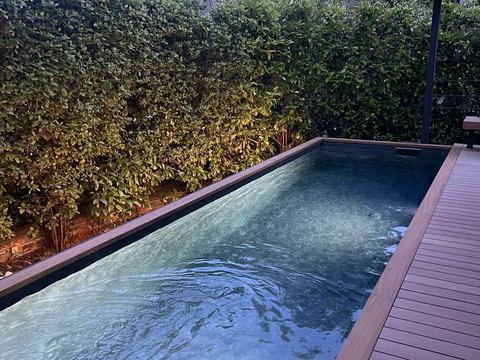

Pool fencing
Pool fencing: glass, metal or wood, a height and gaps a child cannot climb, a self-closing gate, and how to…


Liner repair
Pool liner repair: how to patch a small tear underwater without draining the pool, and when you need a…
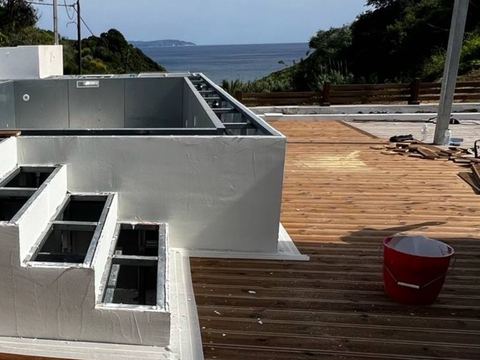

Child safety
Pool safety for children in layers: supervision, fencing, a safety cover, alarms, rules and swimming lessons.…